
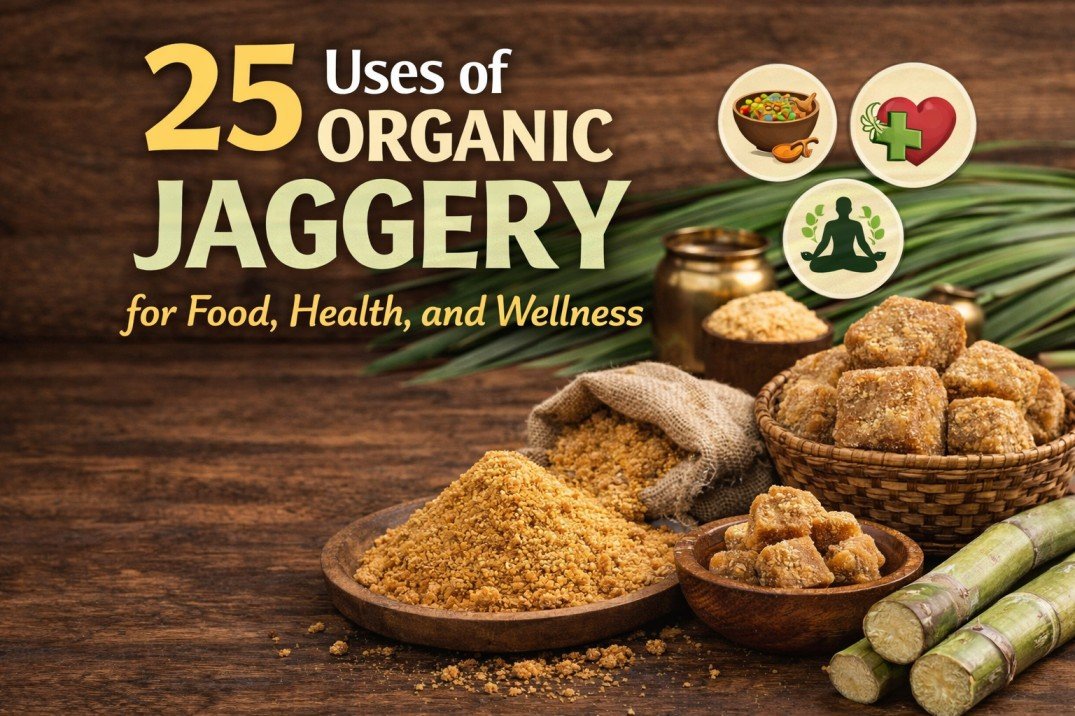
Organic jaggery can be used as a natural sweetener, detox ingredient, and traditional cooking element across food, health, and cultural applications.
As someone who has spent years crafting sugarcane-based sweetener blocks at my own organic farm, I’ve seen how this traditional sugar substitute adds value far beyond sweetness.
Its brown crystalline texture, earthy sweetness, and unrefined composition make it essential in South Asian cuisine, Ayurvedic practices, and home remedies.
In this guide, I’ll share 25 practical uses of organic jaggery that I’ve learned and personally applied, from daily beverages and desserts to wellness, beauty, and farming traditions.
1. Used as a Natural Sweetener in Tea or Coffee
One of the most common ways to enjoy jaggery is by adding a pinch of organic jaggery powder to hot beverages.
It blends smoothly, offering a caramel flavor that enhances tea or coffee without refined sugar.
I use it every morning for its mild sweetness and trace minerals, which align perfectly with organic sweetener alternatives preferred by fitness and wellness enthusiasts.
2. Used in Traditional Indian Sweets
Every festival season, our local rural co-operative sugar mills supply jaggery for making Indian sweets like gur chikki, til ladoo, and gur halwa.
These sweets rely on jaggery’s natural energy source and mineral-rich content, offering nourishment with flavor.
The handmade and sun-dried production method preserves its nutrients, making it both delicious and wholesome.
3. Used for Making Jaggery Syrup and Sauces
I often prepare jaggery syrup for desserts and savory recipes. When melted slowly in water, it becomes a golden syrup with a thick, glossy texture.
Chefs use this syrup in sweet sauces, salad glazes, or breakfast toppings. Unlike refined sugar syrup, it retains molasses and minerals, giving foods a deeper taste and nutritional edge.
4. Used as a Sugar Substitute in Baking
Jaggery makes an excellent sugar alternative in cakes, muffins, and cookies. Bakers love its earthy sweetness and moisture-retaining property.
When I train local bakers on how to use pure jaggery blocks, I recommend grating them finely or melting them into batter.
It produces a rich brown hue while aligning with unrefined sugar uses that appeal to today’s conscious eaters.
5. Used to Balance Spice in Curries and Chutneys
In traditional cooking, jaggery balances strong spices like chili, mustard, or tamarind. Adding a small piece at the end of cooking smooths sharpness and enhances aroma.
I’ve learned this technique from Desi jaggery producers in Maharashtra, where it’s a staple in amti, rasam, and tamarind chutneys.
The contrast of heat and sweetness defines the depth of authentic Indian flavor.
6. Used in Ayurvedic Digestive Mixes
As part of Ayurveda, jaggery acts as an Ayurvedic digestive aid. After meals, I often consume a small cube mixed with fennel seeds.
This combination helps activate digestion and acts as a post-meal sweetener. It’s a custom across India’s heartland, one that connects food with holistic wellness, practiced in both homes and traditional Indian medicine centers.
7. Used in Detox and Hydration Drinks
One of my favorite uses is detox drinks like jaggery water or jaggery tea. Mixing powdered jaggery in warm water early morning helps the body stay hydrated and maintain electrolyte balance.
Its natural detox ingredient property cleanses the system, especially after rich meals. Many organic certification bodies even recommend jaggery as part of sustainable hydration routines because it contains natural iron, calcium, and magnesium.
8. Used for Making Herbal Cough Remedies
For generations, jaggery has been used in homemade cough remedies. Boil it with ginger, pepper, and tulsi leaves for a comforting winter drink.
As an iron-rich sweetener, it coats the throat gently while supporting respiratory comfort.
This recipe has been passed through my family, proving that jaggery remains an essential winter health remedy rooted in practicality and tradition.
9. Used as a Natural Sweetener in Desserts
Organic jaggery elevates homemade puddings, kheer, and payasam. Unlike refined sugar, it imparts a caramelized flavor and a mineral-rich content that enhances both taste and texture.
I often use it in rice pudding as a natural sweet in Indian desserts, where its gentle sweetness complements spices like cardamom and nutmeg.
10. Used in Festive Sweet Preparations
During festivals such as Makar Sankranti and Pongal, freshly made jaggery from organic farms becomes the centerpiece of traditional dishes.
Villagers prefer it for its unrefined composition and natural energy source, especially during winter months when warmth and vitality are needed most.
This cultural connection makes jaggery not just an ingredient but a part of seasonal celebration.
11. Used in Post-Workout Energy Mixes
Athletes and fitness and wellness enthusiasts use jaggery in post-exercise drinks for recovery. When mixed with water and a pinch of salt, it serves as an energy booster food and a natural energy replenisher.
I’ve provided this mix to workers in our mill during harvest season. It restores lost electrolytes naturally, much like commercial sports beverages, but without additives.
12. Used in Traditional Tonics and Ayurvedic Formulations
In Ayurvedic preparations such as Chyawanprash, jaggery works as a stabilizer and base sweetener.
Its probiotic properties and trace antioxidant presence make it suitable for herbal pastes and tonics.
I’ve seen practitioners of Ayurveda and traditional Indian medicine use jaggery to bind herbs, ensuring long shelf life while preserving potency.
13. Used in Postpartum Recovery Foods
In rural regions, new mothers consume jaggery-based mixtures made with fenugreek and ghee. The iron, calcium, and magnesium in jaggery help replenish nutrients after childbirth.
Having seen this practice firsthand on our organic farms, I can confirm that jaggery’s alkaline-forming effect in the body supports natural recovery and strength-building.
14. Used for Making Immunity Laddoos
Immunity laddoos made with sesame seeds, peanuts, and jaggery are a staple in winter households. The slow glucose release of jaggery provides sustained warmth, while sesame adds calcium.
This traditional organic jaggery recipe has stood the test of time because it merges taste and function, a perfect immunity enhancer shaped into a delicious snack.
15. Used as an Ingredient in Fermentation
I often use jaggery to start the fermentation process in homemade vinegars and beverages. Its traditional fermentation benefits make it ideal for feeding healthy bacteria, especially in kombucha or toddy.
This practice, passed down from old Desi jaggery producers, shows how jaggery supports natural food preservation and microbial health.
16. Used in Herbal and Medicinal Drinks
During flu season, I prepare herbal drinks with turmeric, jaggery, and pepper. The jaggery not only sweetens but also works as a carrier for active compounds.
It’s a simple yet powerful natural detox ingredient that aligns with culturally rooted Ayurvedic nutrition principles. The mix supports cleansing and warmth without needing refined sugar.
17. Used as a Sweetening Agent for Yogurt or Curd
Instead of flavored yogurts filled with preservatives, I stir a spoonful of melted jaggery into fresh curd. This natural pairing satisfies the craving for sweetness while maintaining probiotic integrity.
The result is a wholesome dessert that’s creamy, balanced, and aligned with unrefined sugar uses perfect for anyone who values simple, healthy eating.
18. Used in Winter Warmth Recipes
In winter, jaggery becomes a comforting kitchen staple. People combine it with peanuts, sesame, or dry fruits to create warming snacks that sustain energy.
I’ve often seen farmers enjoy a small cube before leaving for early morning work. The brown crystalline texture melts slowly, providing a gentle warmth that defines its place as a winter health remedy.
19. Used as a Cultural Offering in Rituals
Across India, jaggery is used in religious ceremonies and harvest festivals. As a blood purifier, sweet symbolizing prosperity, it’s often offered alongside coconuts and flowers.
In villages near our rural co-operative sugar mills, elders insist that offering jaggery represents purity and gratitude to nature. This practice highlights its deep connection to sustainable farming cycles and tradition.
20. Used in Homemade Hair and Skin Care
Jaggery finds its way into skincare, too. When mixed with honey or lemon, it works as a mild exfoliant for glowing skin.
In my experience, applying a paste made from organic jaggery powder improves skin texture and brightness.
Its trace antioxidant presence helps protect against dullness, making it a natural skincare essential trusted in Ayurveda.
21. Used in Natural Cleaning and Polishing
Many rural households still use jaggery in brass cleaning mixtures. When combined with tamarind pulp, it acts as a natural polish that removes stains effectively.
This traditional method avoids chemical agents while utilizing jaggery’s caramelized acidity. I’ve tested it on my kitchen utensils, and it leaves them shining with a natural finish.
22. Used in Cattle Feed for Strength
Farmers often mix jaggery with dry fodder to feed cattle. It increases palatability and provides energy during heavy agricultural work.
Since it’s an unrefined composition rich in nutrients and minerals, it naturally strengthens livestock.
This use demonstrates how jaggery supports both human and agricultural wellness within local ecosystems.
23. Used for Making Energy Toffees and Candies
Jaggery is a favorite among confectioners who prefer natural sweetener brands over refined sugar.
It forms the base for handcrafted toffees and candies, offering kids a wholesome snack. I often melt coconut jaggery to prepare these at home.
The caramel flavor and wholesome texture give a rustic charm while reducing processed sugar intake.
24. Used in Organic Farming Practices
Some organic farms dissolve jaggery in water and apply it to soil as a microbial activator. It nourishes beneficial bacteria, enriching soil fertility. I learned this technique during my time with India Organic trainers.
The traditional fermentation benefits of jaggery make it valuable not just for human nutrition but also for ecological balance.
25. Used in Homemade Refreshing Drinks
On hot summer days, jaggery coolers are a tradition. Mixing jaggery with lemon and cold water creates a hydrating drink that replenishes energy.
Known locally as gur shikanji, it’s favored for its natural energy replenisher qualities. I drink it often after long hours in the mill; it restores strength instantly and tastes incredibly refreshing.
Conclusion
Through decades of experience making jaggery from pure sugarcane juice, I’ve seen firsthand how deeply it integrates into India’s culture, food, and wellness.
These 25 uses show that organic jaggery is far more than a sweetener; it’s a bridge between tradition and sustainability.
Each application, from Ayurvedic digestive aid to culinary ingredient, proves that jaggery continues to serve modern households in versatile, eco-friendly ways. Its unrefined composition, mineral-rich content, and handmade and sun-dried production method preserve its authenticity.
If you want to experience true, farm-fresh jaggery, I recommend exploring Farmers Food Market. Their products come directly from certified organic farms, ensuring purity, flavor, and traceability recognized by trusted organic certification bodies.




 Home
Home  Whishlist
  Compare
  Checkout
  Account