
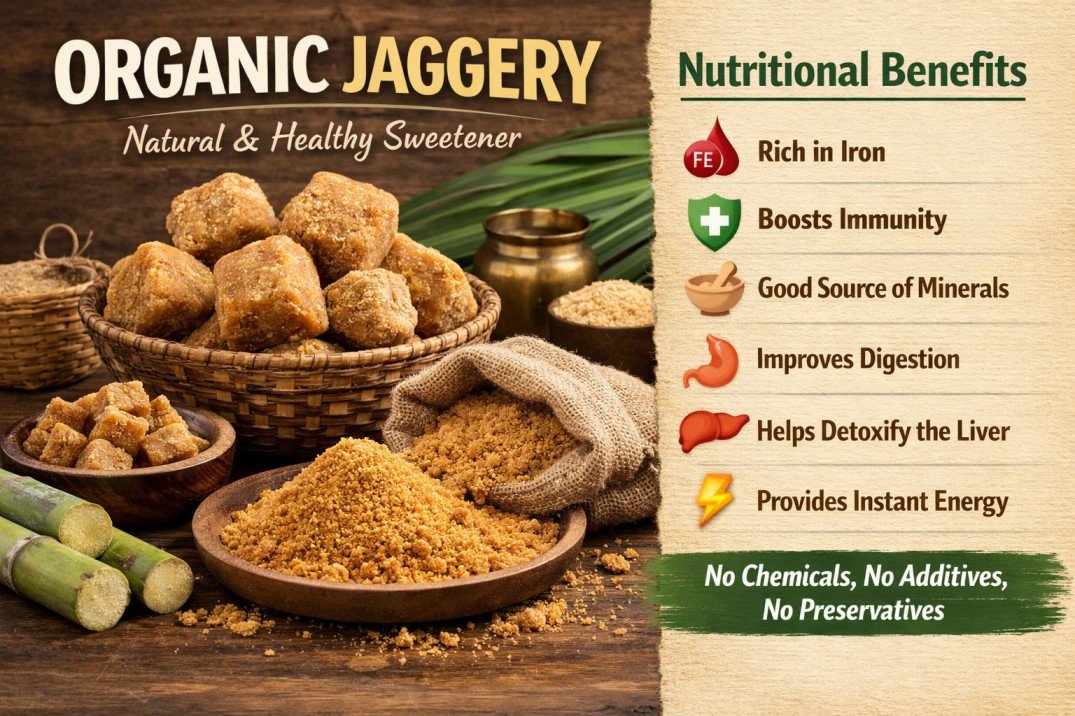
I have been making organic jaggery for over a decade, and during that time, I have seen how people’s interest in natural sweeteners has evolved.
What once served as a humble ingredient in rural kitchens has now become a global symbol of nutrient-rich sweetness.
Unlike refined sugar, which loses every trace of its natural goodness during processing, organic jaggery retains the whole-food sugar alternative character of sugarcane.
When people ask about the nutritional value of organic jaggery, I always explain that its value lies not only in its sweetness but in the minerals, antioxidants, and plant nutrients preserved through its traditional preparation.
Each block of jaggery holds the essence of organic nutrient retention, created through slow boiling and sun-drying, without any synthetic clarifying chemicals.
Understanding Organic Jaggery Composition
The organic jaggery composition starts with pure sugarcane juice, extracted fresh from organically grown canes. No sulphur dioxide or bleaching agents touch the juice.
Instead, we use natural clarifiers such as okra extracts to purify it. The slow evaporation over fire allows natural sugarcane concentrate to thicken while preserving its bioavailable minerals like iron, calcium, magnesium, and phosphorus.
This non-refined sugar composition is rich in trace elements because the molasses layer remains intact. That’s why organic jaggery stands apart from refined sugar and brown sugar.
It contains naturally occurring polyphenols and flavonoid compounds responsible for its golden hue and health-promoting nutrients.
These organic compounds contribute to detoxification and overall immune support, something refined sugar can never offer.
| Nutrient | Amount (Approx.) | Nutritional Role / Benefit |
| Energy (Calories) | 383 kcal | Provides natural energy; traditional energy booster |
| Carbohydrates | 97–98 g | Main energy source from sucrose, glucose, and fructose |
| Protein | 0.3–0.4 g | Supports cell repair in small amounts |
| Fat | 0.1 g | Negligible; naturally low-fat sweetener |
| Iron | 10–11 mg | Helps prevent anemia; improves blood oxygen levels |
| Calcium | 80 mg | Strengthens bones and teeth |
| Magnesium | 70–90 mg | Supports muscle and nerve function |
| Potassium | 100–110 mg | Balances electrolytes; aids heart health |
| Phosphorus | 40–50 mg | Contributes to bone and cell health |
| Zinc | 0.2–0.3 mg | Promotes immune and skin health |
| Sodium | 15 mg | Maintains fluid balance in small quantities |
| Vitamin B6 | 0.02–0.04 mg | Aids metabolism and nervous system function |
| Vitamin C | Trace | Provides antioxidant protection |
| Folate | 2–3 µg | Supports cell division and tissue growth |
| Antioxidants (Polyphenols, Flavonoids) | Present | Protect cells from oxidative stress |
| Glycemic Index (GI) | ~70 | Moderate GI; slower sugar absorption than refined sugar |
Table: Nutritional Value of Organic Jaggery (Per 100 g)
Caloric and Macronutrient Content of Organic Jaggery
Every 100 grams of organic jaggery provides roughly 383 kcal of energy. That’s the caloric value people often quote, but few understand its macronutrient breakdown. Around 98 grams are carbohydrates, derived mainly from sucrose, glucose, and fructose, while protein and fat remain minimal.
The calories in organic jaggery come from natural sugars that release energy gradually. This property makes jaggery a traditional energy booster among farmers and athletes.
During the harvest season, I’ve seen workers mix jaggery with water to form a natural electrolyte drink. Its balance of electrolytes and enzymes helps sustain hydration better than refined sugar drinks.
Despite its sweetness, it supports organic sweeteners and metabolism more efficiently due to its micronutrient density and unprocessed sweetener benefits.
Vitamins and Minerals in Organic Jaggery
When I first began crafting jaggery, I didn’t realize that this golden block carried such a complex nutritional profile.
During analysis at a certified lab, we found that organic jaggery is a mineral-rich sweetener containing essential micronutrients in natural sweeteners such as iron, calcium, magnesium, potassium, zinc, and phosphorus.
These nutrients remain intact only when jaggery is produced without chemicals and with proper temperature control.
The iron content of jaggery deserves special mention. Each 100 grams can provide up to 10–11 mg of iron, which naturally supports anemia prevention and oxygen transport in the body.
In rural India, women often add a small piece of jaggery to meals for this reason. Along with iron, magnesium and potassium strengthen muscle function and maintain electrolyte balance, while phosphorus and calcium help preserve bone density.
Jaggery also contains Vitamin B6, Vitamin C, and folate, which contribute to metabolism and immunity.
Together, these nutrients give organic jaggery its nutrient density and make it more than just a source of sweetness; it’s a functional food that supports energy, bone health, and immune defense naturally.
Organic Jaggery Health Composition and Its Impact on the Body
The organic jaggery health composition is what differentiates it from every other sweetener. Its polyphenols, phenolic acids, and antioxidants act as protectors against oxidative stress.
I’ve personally seen people who regularly replace refined sugar with organic jaggery help health to experience better digestion, stable energy levels, and improved skin tone.
These results come from its alkaline mineral balance and retained plant phytonutrients, both unique to unrefined sugar processing.
The antioxidants in jaggery cleanse the liver by aiding detoxification and removing toxins from the bloodstream. Its natural glycemic index (GI) is slightly lower than refined sugar, which means a slower rise in blood glucose.
When used in moderation, it supports organic sweeteners and metabolism, maintaining steady energy release throughout the day.
Comparison with Refined Sugar
In my early years of production, I conducted a small experiment comparing organic jaggery vs sugar nutrition. The difference was clear even without lab reports. Refined sugar had high sucrose but zero vitamin content or iron level.
Organic jaggery, on the other hand, retained minerals, trace elements, and chlorophyll content from sugarcane, which gives it its earthy aroma.
The unrefined sugar nutritional analysis shows that jaggery has a far better traditional sweetener health profile.
It supports metabolic functions and provides nutrient preservation while sugar merely delivers empty calories. This makes jaggery a whole-food sugar alternative, both nutritionally and culturally.
Final Thoughts
Having spent years perfecting the art of making organic jaggery, I can say that its nutritional value is both authentic and beneficial.
Each batch I produce carries the non-refined sugar composition of sugarcane, rich with iron, calcium, magnesium, and antioxidants that nature intended.
It’s not only a sweetener; it’s a plant-based sweet source that nourishes the body with trace elements and supports metabolism and immunity.
Its nutrient preservation and cold-processed nutrient stability make it a smart replacement for refined sugar in tea, sweets, or even baking. Choosing organic jaggery means supporting farmers who grow cane sustainably and protect soil health.
If you wish to experience authentic flavor and nutrition, consider sourcing it directly from trusted markets like Farmer Food Market, where genuine producers offer FSSAI Certified and USDA Organic jaggery made through traditional boiling methods.
Frequently Asked Questions
1. Does organic jaggery lose nutrients over time?
Yes. Long storage or humidity can lower its antioxidant and mineral levels. Keep it sealed and dry to maintain freshness.
2. Is palm jaggery more nutritious than sugarcane jaggery?
Both are rich in nutrients. Sugarcane jaggery has more iron and calcium, while palm jaggery has extra potassium and magnesium.
3. Does cooking reduce the nutrition of organic jaggery?
High heat can reduce vitamins and antioxidants. Add jaggery after cooking or once the food cools slightly to keep nutrients intact.
4. Can organic jaggery fit into a clean-eating diet?
Yes. It’s a natural, unprocessed sweetener made from sugarcane juice and fits perfectly into whole-food diets.
5. How can you tell if jaggery is truly organic?
Look for a golden-brown color, earthy aroma, smooth texture, and certifications like USDA Organic or India Organic.




 Home
Home  Whishlist
  Compare
  Checkout
  Account